
Best practices for reservation management in Indian restaurants
Seven practical ways to cut no-shows, avoid over-booking and fill every table during peak hours
19 Oct, 2026 by Editorial Team
A packed Friday evening, three walk-in parties waiting, two confirmed bookings that never arrived, and a corner table sitting empty because the host forgot to release it. Reservation management is the discipline that prevents this chaos, and restaurants across India that master it consistently outperform those that do not. EazyDiner's Livetable platform is built to help restaurant owners and managers bring structure to exactly these situations.
TL;DR - Summary
- What is reservation management?
Reservation management in restaurants is the structured process of accepting, organising and honouring table bookings so that guest flow, table turns, and service quality stay predictable. It covers everything from initial booking confirmation to post-visit follow-up.
- Why does it matter for Indian restaurants? Indian dining culture blends walk-ins with reservations, especially during weekends and festivals. Without a clear system, restaurants lose revenue to no-shows, overbooking, and idle tables during peak hours.
- How does reservation software help?
Reservation management software such as Livetable by EazyDiner centralises bookings, tracks table status and automates guest reminders. This can help reduce manual errors and improve table utilisation across lunch and dinner services.
- What best practices should managers follow?
Effective reservation management relies on defined booking windows, smart table allocation, no-show policies, staff coordination and consistent use of a reservation dashboard to monitor covers in real time.
What is reservation management?
Reservation management in restaurants refers to the end-to-end process of receiving, confirming, organising and fulfilling table bookings. Reservation management covers how a restaurant allocates tables, communicates with guests before arrival, handles cancellations and coordinates front-of-house staff around expected covers.
For Indian restaurants, reservation management also means balancing confirmed bookings against walk-in traffic. A Mughlai fine dining restaurant in Delhi NCR faces different demand patterns than a South Indian breakfast spot in Chennai, yet both benefit from a structured approach to managing who sits where and when.
 Why reservation management matters
Restaurants that treat reservations casually pay a measurable cost. Empty tables during peak hours represent lost revenue that cannot be recovered. Over-booking leads to long waits, negative reviews and guests who never return. Under-booking leaves staff idle and food inventory underused.
In Indian metro markets such as Mumbai, Delhi NCR and Bangalore, demand volatility is high. Weekday lunches can be quiet while Friday and Saturday dinners fill up fast. Festival seasons, long weekends and wedding season create sudden spikes. Reservation management gives restaurants the ability to anticipate demand rather than react to it.
Reservation management also shapes the guest experience. A confirmed booking that is honoured on time builds trust. A guest who receives a reminder message the morning of the reservation is less likely to no-show. These small operational details compound into stronger repeat business over time.
7 best practices for reservation management
1. Define clear booking windows
Set specific time slots for lunch and dinner seatings rather than accepting open-ended reservations. For example, a restaurant might offer 12:30 PM, 1:00 PM and 1:30 PM lunch slots, each with a 90-minute seating window. Clear windows help the kitchen plan prep and allow the host to stagger arrivals so the dining room fills evenly.
2. Allocate tables by party size
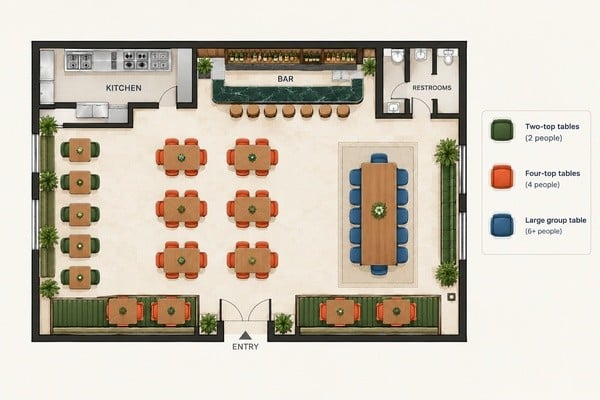
Map the floor plan so that two-top tables serve couples, four-tops handle families, and larger configurations accommodate group reservations. Avoid seating a couple at a six-top during peak hours. Livetable by EazyDiner is designed to help restaurants visualise table allocation on a reservation dashboard, making it easier to assign the right table to the right party.
3. Confirm bookings proactively
Send a confirmation message when the booking is made and a reminder 4 to 6 hours before the reservation. Proactive confirmation can help reduce no-shows because guests who forgot about the booking have time to cancel, freeing the table for someone else. Reservation management software can automate these messages so staff do not need to call each guest manually.
4. Enforce a no-show policy
No-shows are one of the biggest revenue drains for Indian restaurants, especially during weekends and holidays. Establish a clear policy: for instance, hold the table for 15 minutes past the reservation time, then release it. Communicate the policy at the time of booking. Some restaurants also use prepaid dining deals or advance deposits for large group reservations, which can help reduce last-minute cancellations.
5. Coordinate staff around covers
Share the reservation list with the kitchen, bar and service teams before each shift. When the kitchen knows 40 covers are expected between 8:00 PM and 9:00 PM, prep can be timed accordingly. When servers know which tables are reserved and which are open for walk-ins, they can guide arriving guests without confusion. Livetable's reservation dashboard is designed to give all teams a single view of expected and seated covers.
6. Balance walk-ins with reservations
Indian dining culture values spontaneity. Many guests prefer to walk in without a booking, especially for casual and fast food restaurants. A practical approach is to reserve 60 to 70 percent of tables for confirmed bookings and keep the rest available for walk-in dining. The exact split depends on the restaurant's format: fine dining restaurants in Mumbai or Delhi NCR may lean heavier on reservations, while a dosa restaurant in Bangalore may keep more tables open for walk-ins.
7. Review data after every service
Track metrics such as no-show rate, average table turn time, peak booking windows and cancellation patterns. Reservation management software can help surface these numbers without manual counting. Over weeks and months, patterns emerge: perhaps Tuesday dinners consistently underperform, or Saturday lunch reservations spike when a nearby event venue has a function. Use these insights to adjust staffing, inventory and marketing.
How reservation software supports these practices
Reservation management software centralises the booking process so that phone calls, online reservations and walk-in entries all feed into one system. Livetable by EazyDiner, for example, is a restaurant SaaS platform designed to help restaurants manage reservations, track table status and coordinate service across shifts.
Key capabilities of reservation management software typically include a reservation dashboard for viewing all bookings, automated guest reminders, table allocation tools that map the floor plan and reporting features that surface operational data. For restaurant owners and managers in India, choosing software that handles both reservations and walk-in tracking is important because the two streams coexist in nearly every format.
Reservation management software can also help restaurants connect with discovery platforms. When a restaurant's availability is visible on a booking app such as EazyDiner, guests can reserve a table without calling the restaurant directly. This can help reduce the front-of-house workload and capture bookings that might otherwise go to a competitor.
Common mistakes to avoid
Over-booking without a buffer is a frequent error. Restaurants sometimes accept more reservations than they have tables, hoping for cancellations. When everyone shows up, the result is long waits and frustrated guests. A better approach is to maintain a short waitlist rather than over-commit.
Ignoring walk-in demand is another pitfall. Restaurants that reserve every table leave no room for spontaneous diners, which can hurt weekday revenue when reservation volume is low. The 60 to 70 per cent reservation guideline mentioned earlier helps avoid this trap.
Failing to train staff on the reservation system undermines every other best practice. If the host does not know how to update the dashboard or the server does not check the reservation list, the system breaks down regardless of how good the software is. Regular training sessions, even brief 10-minute refreshers before a shift, can help keep the team aligned.
Conclusion
Reservation management is not a luxury feature for high-end restaurants alone. Every Indian restaurant, from a North Indian family dining spot in Noida to a Pan-Asian fine dining venue in Mumbai, benefits from structured booking practices. Define clear windows, allocate tables smartly, confirm bookings, enforce no-show policies, coordinate staff, balance walk-ins and review data consistently. Tools such as Livetable by EazyDiner are designed to support these practices so that restaurant owners and managers can focus on hospitality rather than logistics.