
Why Pan-Asian Recommendations in Bangalore Often Blur Very Different Dining Experiences
Pan-Asian covers sushi, Thai curries, dim sum and more under one label
27 Oct, 2026 by Editorial Team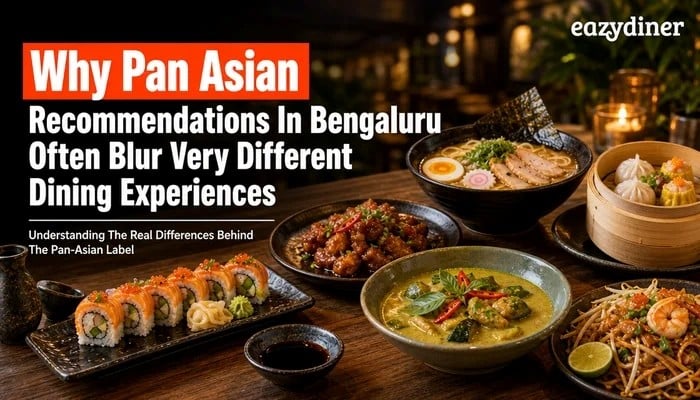
You search for Pan-Asian restaurants in Bangalore, and the results feel generous. Dozens of names appear. But one listing serves ramen and robata, another specialises in Thai curries, and a third calls itself Asian fusion with a cocktail bar attached. The label "Pan-Asian" promises variety, yet it also hides real differences in format, price, flavour profile and occasion. EazyDiner has observed this pattern across Bangalore's dining scene, where a single cuisine tag can collapse wildly different experiences into one undifferentiated list. Understanding why that happens is the first step toward making sharper choices before you commit to a table.
TL;DR - Summary
- What does Pan-Asian actually mean?
Pan-Asian is a broad umbrella covering Thai, Japanese, Chinese, Korean, Vietnamese and fusion formats. In Bangalore, restaurants using the label can range from a casual noodle bar to a fine dining omakase counter, which makes the category unreliable as a discovery filter on its own.
- Why do recommendations blur?
Most discovery platforms group all these formats under one tag. A diner looking for a quiet sushi dinner and a diner looking for a loud, sharing-style Thai meal both land on the same list, with no way to separate intent from label.
- What gets lost for the diner?
Price expectations, portion style, noise level, dress code and occasion fit all vary across Pan-Asian sub-cuisines. A vague recommendation can lead to a mismatch between what you wanted and what you booked.
- How does EazyDiner help?
EazyDiner offers cuisine filters, occasion tags and dining deals that let Bangalore diners narrow Pan-Asian results by sub-cuisine, format and budget, then book a confirmed table directly through the platform.
What Pan-Asian means in Bangalore
Pan-Asian is not a cuisine. It is a marketing umbrella. The term groups together culinary traditions that share a continent but little else. Japanese precision, Thai aromatics, Chinese wok technique and Korean fermentation each carry distinct histories, ingredients and dining rituals.
In Bangalore, the Pan-Asian label appears on menus that range from a 40-cover izakaya in Indiranagar to a sprawling buffet restaurant in Whitefield. Some restaurants use Pan-Asian to signal a multi-country menu. Others use it because their food blends influences and resists a single national tag.
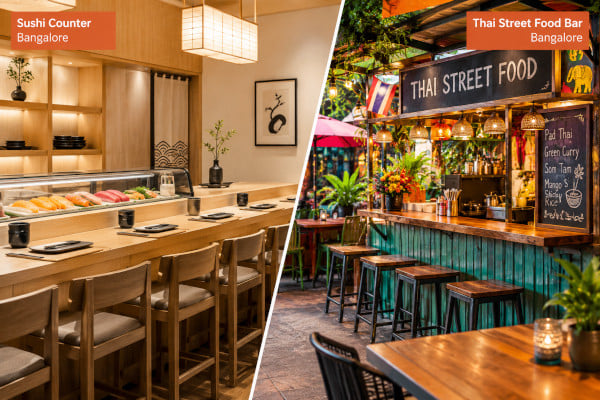
Neither usage is wrong. But when a recommendation engine treats all of them as one category, the diner loses the ability to distinguish between a place built around dim sum trolleys and a place built around a sushi counter. The word "Pan-Asian" becomes a container so large it stops being useful.
Warning signs the category is too broad
Certain patterns signal that a Pan-Asian recommendation is blurring experiences you should evaluate separately. Recognising these signs can save you from booking a table that does not match your evening.
1. The menu spans four or more national cuisines
A restaurant listing sushi, pad thai, kung pao chicken and bibimbap on the same menu is covering enormous culinary ground. Execution depth often trades off against breadth. A diner expecting specialist-level sushi may find the fish selection limited because the kitchen also runs a Thai section.
2. Price range is vague or absent
Pan-Asian restaurants in Bangalore can cost anywhere from ₹800 to ₹4,000 for two. When a recommendation does not clarify the price band, you cannot tell whether you are heading to a casual lunch spot or a fine dining destination. That gap matters for occasion planning.
3. No mention of dining format
Shared plates, tasting menus, teppanyaki counters, buffets and a la carte service all exist under the Pan-Asian umbrella. A recommendation that says "great Pan-Asian place" without specifying format leaves you guessing whether to expect a leisurely omakase or a quick bowl of ramen.
4. Occasion fit is ignored
A loud, neon-lit Asian street food bar and a quiet, minimalist Japanese restaurant both qualify as Pan-Asian. One suits a birthday group of eight; the other suits a date night for two. Recommendations that skip occasion context force the diner to do extra research.
5. Sub-cuisine is not filterable
When a platform groups Thai, Japanese, Chinese and Korean under one tag with no way to drill down, the diner scrolls through results that are only superficially related. The search becomes slower and less precise, which is the opposite of what a discovery tool should deliver.
6. Reviews mix incompatible expectations
A restaurant rated highly for its cocktails and sharing plates may disappoint someone who came for authentic ramen. When reviews from different diner types blend into one score, the rating reflects popularity, not fit. A four-star Pan-Asian review tells you less than a four-star review of a specific sub-cuisine.
Why Bangalore amplifies the problem
Bangalore's dining market is unusually dense with Pan-Asian options. The city's tech workforce, international exposure and high disposable incomes have driven demand for Asian cuisines across every price tier. Koramangala, Indiranagar, JP Nagar and Whitefield each host multiple restaurants using the Pan-Asian label.
That density means a single search for "Pan-Asian restaurants in Bangalore" can return results spanning casual, mid-range and premium segments. Without structured filters, the diner faces a wall of names that look interchangeable but are not.
Bangalore also has a strong culture of occasion-driven dining. Weeknight dinners, weekend celebrations, client meals and date nights each carry different expectations. A recommendation engine that treats Pan-Asian as one flat category cannot serve all four occasions from the same list.
What diners actually need
The fix is not fewer Pan-Asian restaurants. Bangalore benefits from the variety. The fix is better filtering, clearer context and more precise recommendations. Diners need to answer three questions before they book.
First, which sub-cuisine do you want? Thai, Japanese, Chinese, Korean, Vietnamese or a deliberate fusion? Second, what format suits your occasion? A tasting menu, a sharing-style meal, a quick lunch or a buffet? Third, what is your budget? Knowing these three things turns a vague Pan-Asian search into a specific, bookable decision.
EazyDiner addresses this by offering cuisine filters that go beyond the Pan-Asian umbrella, occasion-based tags and dining deals that help Bangalore diners narrow results by what actually matters. When you search for Pan-Asian restaurants on EazyDiner, you can filter by sub-cuisine, check pricing context and book a confirmed table, all within the same flow. EazyDiner's dining deals and prepaid offers also let diners lock in savings before arriving, which removes another layer of uncertainty from the booking process.
How sharper filters change the experience
Consider two diners searching for Pan-Asian food in Bangalore on a Friday evening. One wants a quiet Japanese dinner with a partner. The other wants a lively Thai meal with six friends. On a platform that treats Pan-Asian as a single category, both diners see the same list and must scroll, read reviews and guess.
On EazyDiner, the first diner can filter for Japanese restaurants, check occasion suitability and book a table for two with a confirmed reservation. The second diner can filter for Thai restaurants, look for group-friendly formats and apply a dining deal to reduce the bill. Each diner reaches a relevant result faster because the platform does not collapse their different needs into one label
That precision matters most on weekends, when Bangalore's popular Pan-Asian restaurants fill up quickly. A confirmed reservation through EazyDiner means neither diner risks a long wait or a turned-away walk-in. The platform's table booking flow removes the friction that broad recommendations create.
Moving past the Pan-Asian blur
Pan-Asian is a useful shorthand for a region of the world's food. It is not a useful shorthand for choosing where to eat tonight. Bangalore diners deserve recommendations that respect the real differences between a sushi counter and a Thai street food bar, between a tasting menu and a buffet, between a date night and a group celebration. EazyDiner is designed to help diners in Bangalore move past the blur by offering structured filters, occasion context, dining deals and confirmed table bookings. The next time you search for Pan-Asian food, start by asking what you actually want, then let EazyDiner narrow the field.