
Best Practices for Using Real Time Table Availability to Improve Booking Flow and Floor Planning
A live reservation dashboard helps restaurants align booking flow with floor capacity
20 Nov, 2026 by Editorial Team
Every empty table during a Friday dinner rush costs a restaurant real revenue. Every double booking frustrates a guest who may never return. For restaurants across India, the gap between what the floor plan shows and what the booking page promises is where service breaks down. Livetable by EazyDiner is designed to close that gap, connecting real-time table availability with a smoother booking flow and sharper floor planning.
TL;DR - Summary
- What is real-time table availability?
Real-time table availability means the booking system reflects the exact status of every table on the floor at any moment. Livetable by EazyDiner can help restaurants keep guest-facing availability and backend seating data in sync, reducing double bookings and confusion.
- Why does it matter for booking flow?
When guests see accurate open slots, they book faster and with more confidence. Restaurants that display live availability through Livetable can reduce abandoned bookings because diners trust the confirmation they receive.
- How does it improve floor planning?
Live table data gives floor managers a current view of which sections are filling, which tables are turning and where gaps exist. Livetable's reservation dashboard is designed to help managers reassign seating and adjust covers in real time rather than relying on static plans.
- Who benefits most?
Restaurants handling high volumes during peak hours, multi section venues and properties with mixed party sizes stand to gain the most. Livetable is built for both small and large restaurants in India.
Why live availability matters
Static table charts updated once a day cannot keep pace with cancellations, walk ins and late arrivals. A floor plan drawn at 10 AM looks nothing like the actual floor at 8 PM. Restaurants that rely on manual tracking often overbook popular time slots or leave tables empty during shoulder hours.
Livetable by EazyDiner is designed to address this by feeding real time booking updates into a centralised reservation dashboard. When a guest cancels a 7:30 PM slot, that table reappears on the booking page within moments. When a walk-in party is seated, the system can reflect the change so the host stand and the online channel stay aligned.
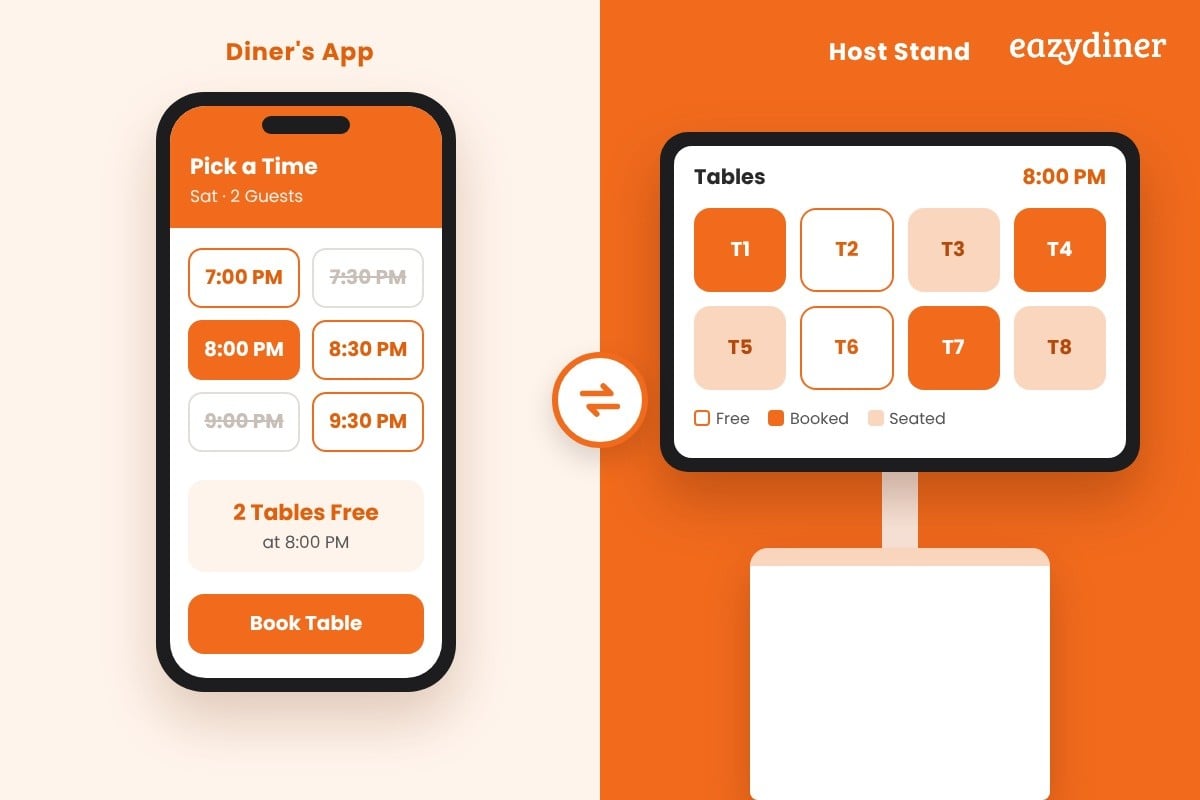
Accurate availability also builds trust with diners. A guest searching for a confirmed restaurant reservation in India expects the slot shown to be genuinely open. If the restaurant later calls to reschedule, that trust erodes. Real time syncing through reservation management software like Livetable can help prevent these friction points before they reach the guest.
Best practices for booking flow
Connecting live availability to the booking journey requires more than just turning on a feature. Restaurants should follow deliberate practices to get the most from the technology.
1. Keep table status current
Train front of house staff to update table status as events happen: seated, cleared, held for a VIP, blocked for maintenance. Livetable's reservation system is designed to make these updates quick, but the discipline must come from the team. A two-minute delay in marking a table as cleared can mean a lost booking during peak hours.
2. Set realistic turn times
Every table type should have an expected turn time based on the meal period. A four-top at lunch may turn in 45 minutes; the same table at dinner may need 90 minutes. Livetable can help restaurants configure these windows so the system does not offer a slot that overlaps with an existing reservation.
3. Use buffer slots wisely
Blocking a 15-20-minute buffer between seatings gives the floor team time to reset without rushing guests. Reservation management software like Livetable can automate buffer logic so the booking page never shows back-to-back slots that the kitchen or service team cannot support.
4. Display availability by section
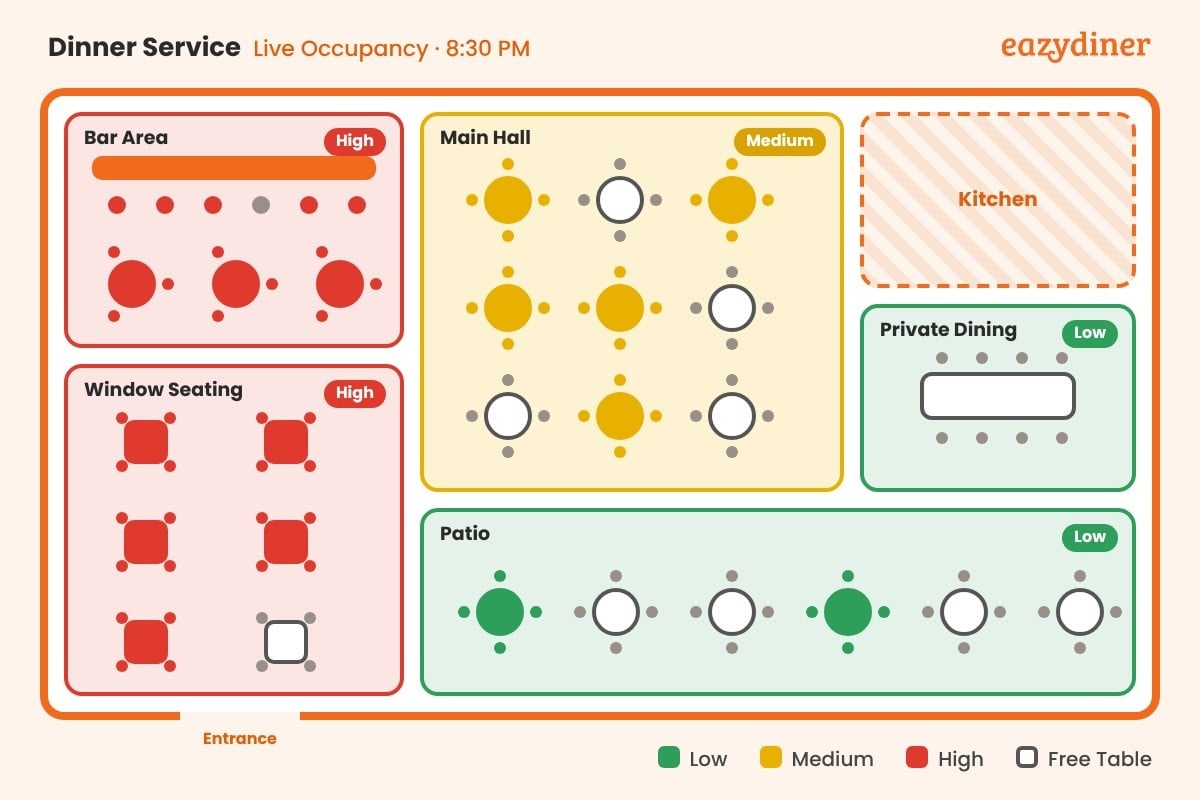
Guests often prefer a terrace, a private dining room or a window seat. Showing availability by section rather than just by time slot can help restaurants fill less popular areas and reduce clustering. Livetable's table management tools are designed to support section-level visibility.
5. Confirm instantly
Instant booking confirmation removes doubt. When a guest books through EazyDiner and receives immediate confirmation powered by Livetable, the restaurant eliminates the back and forth of manual confirmation calls. This is especially valuable for same day restaurant reservations, where speed matters.
Best practices for floor planning
Floor planning is not just about where tables sit physically. It is about how the restaurant allocates capacity across time, party size and service style. Real time data makes floor planning dynamic rather than fixed.
6. Monitor section load in real time
A floor manager watching Livetable's dashboard can see which sections are filling and which have open capacity. If the main dining room is at 90% for the 8 PM slot but the bar area is at 40%, the manager can redirect walk ins or suggest the bar section to online bookers. This kind of live rebalancing is difficult without real time reservation data.
7. Adjust covers for party size mix
A restaurant with twenty two tops will struggle if most bookings are for parties of four or six. Livetable can help managers see the incoming party size distribution and reconfigure tables, combining two tops into a four top or splitting a large communal table, before the rush begins.
8. Plan staffing around booking patterns
When reservation data flows in real time, managers can spot trends: a surge of bookings for 7:30 PM on Saturdays, a quiet Wednesday lunch, a spike in large group reservations around festivals. Livetable's booking data is designed to help restaurants align staffing levels with expected demand rather than guessing.
9. Track no show patterns
No shows distort floor plans. If a restaurant consistently sees 10% no shows on Friday evenings, the floor plan should account for that. Reservation management software like Livetable can help restaurants track no show rates by time slot, day and booking channel, enabling smarter overbooking strategies without risking guest experience.
10. Review table utilisation weekly
Real-time data is most powerful when reviewed in aggregate. A weekly review of table utilisation, average turn times and peak slot fill rates helps restaurants refine their floor plans over time. Livetable's restaurant operations tools are designed to surface these metrics so managers can make evidence-based adjustments.
Connecting booking flow to floor planning
The real advantage of real-time table availability is that booking flow and floor planning stop being separate activities. When the booking page reflects the actual floor, every reservation becomes a floor planning decision. The system knows which table is being offered, not just which time slot.
Livetable by EazyDiner is designed to unify these two workflows. The guest sees accurate availability. The host stand sees the same data. The floor manager sees capacity across sections. This alignment can help restaurants serve more covers without adding tables, simply by using existing capacity more efficiently.
For restaurant operators evaluating reservation management software in India, the question is not whether real-time availability is useful. The question is whether the operational discipline exists to keep the data accurate. The best software in the world cannot help if the floor team does not update table status promptly. Livetable provides the tools; the restaurant provides the habits.