Offer Stacking in Dining Is Useful Only When the Checkout Experience Stays Transparent
Why a clear breakdown at checkout matters more than the biggest headline discount when you combine dining offers
22 Oct, 2026 by Editorial Team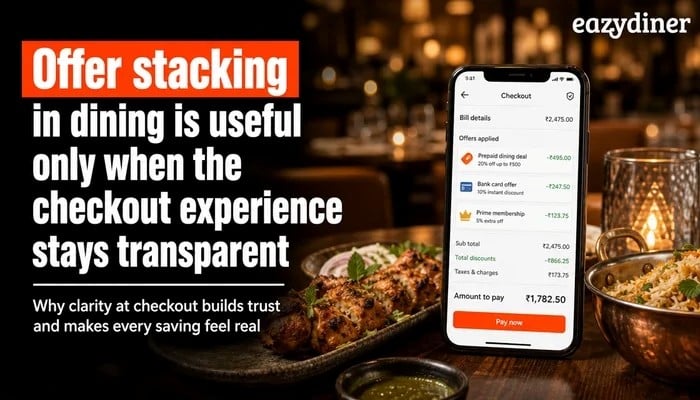
Every diner in India who has tried to combine a bank card offer with a prepaid deal and a membership discount knows the moment of doubt: what will the final bill actually be? Offer stacking can deliver genuine savings, but only when the checkout experience stays transparent. EazyDiner's approach to payment offers, including PayEazy, is built on the premise that layered deals should simplify the bill, not obscure it.
TL;DR - Summary
- What is offer stacking in dining?
Offer stacking means applying more than one discount or deal to a single restaurant bill. Common combinations include prepaid deals, bank card offers, membership discounts and cashback. When done well, offer stacking can help diners save meaningfully on meals out.
- When does stacking become a problem?
Stacking creates confusion when the checkout does not show each layer clearly. If a diner cannot see which offer applied, what got excluded and what the final payable amount is before confirming payment, the savings feel uncertain rather than rewarding.
- What is PayEazy on EazyDiner?
PayEazy is EazyDiner's integrated payment feature that lets diners pay for restaurant meals directly through the app. PayEazy is designed to show applicable offers at checkout so the diner sees the exact amount before completing payment.
- Why does transparency matter more than discount size?
A 50 percent headline discount that hides surcharges or unclear terms erodes trust faster than a smaller, clearly displayed saving builds it. Transparent checkout means every line item, exclusion and final total is visible before the diner taps "pay."
- How does EazyDiner handle multiple offers?
EazyDiner surfaces prepaid dining deals, Prime membership benefits and payment offers within a single checkout flow. The goal is to let diners see exactly how each layer affects the bill, so the payable amount is predictable and easy to understand.
Why diners stack offers
Dining out in India now involves more payment variables than ever. A single meal might qualify for a prepaid dining deal, a credit card cashback offer and a Prime membership discount. Value-conscious diners actively seek these combinations because the cumulative savings on a family dinner or a weekend celebration can be substantial.
The motivation is straightforward. Restaurant bills in metro cities add up quickly, especially at fine dining venues. Stacking two or three offers on a single bill can help reduce the effective cost by a meaningful margin. For frequent diners, the habit of checking available deals before booking has become second nature.
EazyDiner's dining deals and prepaid offers are structured to reward this behaviour. The platform lists restaurant offers alongside table booking, so a diner browsing restaurants near them can see potential savings before committing. That pre-booking visibility is the first layer of transparency: knowing what is possible before arriving at the restaurant.
Where stacking breaks down
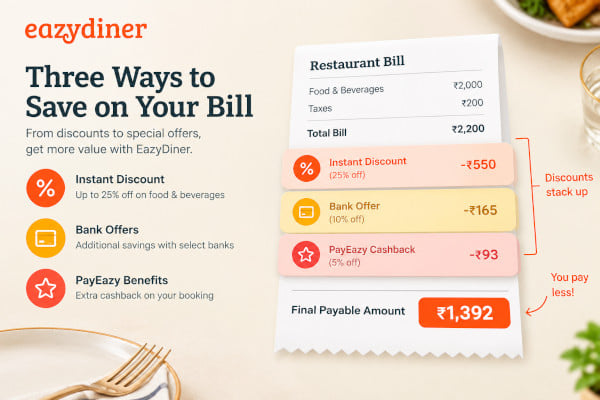
The trouble starts at checkout. When multiple offers interact, the arithmetic can become opaque. A diner might assume a 25 percent prepaid deal and a 10 percent bank card offer combine to 35 percent off. In practice, one offer might apply to the base bill while the other applies to the post-discount amount. Or certain menu items might be excluded from one deal but not the other.
Without a clear breakdown, the diner discovers the actual saving only after payment. That moment of surprise, whether positive or negative, undermines trust. A restaurant payment experience that leaves the diner guessing is a failed experience, regardless of how large the discount was.
Three common transparency failures recur across dining payment flows. First, hidden exclusions: taxes, service charges or specific dishes silently removed from the offer scope. Second, unclear stacking rules: no indication of whether offers combine, override each other or apply sequentially. Third, post-payment revelation: the diner sees the final breakdown only on the receipt, not before confirming.
What transparent checkout looks like
A transparent checkout does three things before the diner confirms payment. It shows every offer that has been applied, with the discount amount for each. It flags any exclusions or conditions in plain language. And it displays the final payable amount, inclusive of taxes and charges, as a single clear number.
EazyDiner's PayEazy checkout is designed to follow this pattern. When a diner uses PayEazy to pay at a restaurant, the app can surface applicable payment offers and prepaid dining deals within the same screen. The intent is that the diner sees the layered savings broken down before tapping to confirm. No post-payment surprises.
This matters especially for diners using EazyDiner Prime membership alongside other offers. Prime members receive additional dining discounts at partner restaurants. When a Prime discount combines with a prepaid deal or a card offer, the checkout should show each layer separately. The diner should know exactly how much Prime saved, how much the prepaid deal saved and what the card offer contributed.
PayEazy and the trust equation
PayEazy is EazyDiner's integrated restaurant payment feature. Diners can pay their restaurant bill through the EazyDiner app, accessing payment offers that may not be available through other payment methods at the table. The feature is designed to consolidate the offer experience: instead of negotiating separate discounts with the restaurant staff, the diner sees everything in one place.
The trust equation in dining payments is simple. Clarity of the payable amount before payment builds trust. Ambiguity erodes it. A diner who consistently sees accurate, transparent breakdowns on EazyDiner is more likely to return to the platform for future bookings and payments. A diner who feels misled, even once, is unlikely to trust stacked offers again.
For restaurants, transparent stacking also reduces friction. When the payment app handles the arithmetic and displays the breakdown, restaurant staff spend less time explaining offers at the table. The dining experience stays focused on food and hospitality rather than bill disputes.
When stacking genuinely helps
Offer stacking is genuinely useful under specific conditions. The diner must be able to see all applicable offers before choosing a restaurant. The checkout must show how each offer affects the bill. And the final amount must be predictable, meaning no hidden adjustments after the diner commits.
EazyDiner's model of combining restaurant discovery with payment offers is designed to meet these conditions. A diner searching for restaurants near them can filter by available dining deals, check whether their bank card qualifies for additional cashback and see if their Prime membership applies, all before booking a table. That pre-decision transparency is what makes stacking valuable rather than confusing.
Consider a family dinner at a North Indian restaurant in Delhi NCR. The diner books through EazyDiner, selects a prepaid dining deal and pays via PayEazy. At checkout, the app shows the prepaid discount, any applicable card offer and the Prime membership benefit as separate line items. The final payable amount is clear. The family enjoys the meal knowing exactly what the bill will be. That is stacking done right.
The line between savings and confusion
The dining industry's push toward layered offers is not slowing down. Bank partnerships, app-exclusive deals, membership programmes and seasonal promotions will continue to multiply. The question is not whether diners will encounter stacked offers. The question is whether those offers will be presented in a way that builds confidence or breeds scepticism.
EazyDiner's position is that offer stacking should be a feature of the checkout, not a puzzle the diner has to solve. PayEazy, prepaid deals and Prime membership benefits are designed to work together within a single transparent flow. When the checkout is clear, the diner wins. When the checkout is opaque, even a generous discount feels like a trick.
For value-conscious diners in India, the best payment offer is not necessarily the largest one. The best payment offer is the one where the diner knows exactly what the savings are, exactly what the exclusions are and exactly what amount will be charged. Transparency is the offer that matters most.