Prepaid Dining Will Keep Growing in India Only if Value Math Becomes Easier for Diners
Clear value math turns prepaid deal browsers into confident diners
20 Nov, 2026 by Editorial Team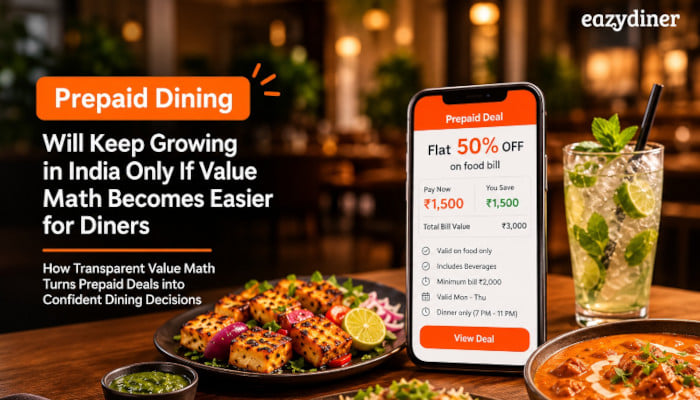
Prepaid dining deals in India generate curiosity, but they also generate confusion. A diner scrolling through EazyDiner sees "flat 50% off" on a restaurant listing and pauses. The discount looks attractive, yet the mental arithmetic stalls: what exactly will the final bill be, which items qualify, and does the saving justify paying before sitting down? That hesitation is the single biggest barrier between prepaid dining's current traction and its next phase of growth across Indian cities.
TL;DR - Summary
- Are prepaid dining deals worth it?
Prepaid deals can deliver meaningful savings, often 25% to 50% off the food bill, but only when the diner understands which menu items qualify and what the effective spend looks like before paying. EazyDiner structures prepaid offers so the value is visible upfront.
- Why do diners hesitate?
The core friction is not price but clarity. Many diners cannot quickly calculate their actual saving because conditions such as minimum order values, excluded beverages and time restrictions are buried in fine print. Transparent value math removes that friction.
- What is "value math" in prepaid dining?
Value math is the diner's ability to compare the prepaid price against what the same meal would cost at full price, accounting for taxes, exclusions and group size. When this comparison takes seconds rather than minutes, conversion improves.
- How does EazyDiner help?
EazyDiner displays the prepaid price, the effective discount percentage and the conditions on the deal page itself, so diners can judge the offer before committing. This approach positions the platform as a guide to prepaid decision making, not just a discount publisher.
- Will prepaid dining keep growing?
Growth depends on the industry making savings calculations effortless. If diners consistently feel confident about what they pay versus what they save, prepaid adoption in India is likely to accelerate across weekday lunches, celebrations and group outings alike.
Why prepaid deals stall at interest
Search volume for "prepaid dining deals" in India has climbed steadily. Diners in Delhi NCR, Mumbai and Bangalore type queries like "are prepaid restaurant deals worth it" and "how do prepaid deals work on restaurant booking apps" every week. The intent is real. Yet a significant share of those searchers never complete a prepaid purchase.
The gap between interest and action is not about trust in the restaurant or the platform. The gap is about arithmetic. A diner comparing two Saturday dinner options needs to know, within a few seconds, how much a prepaid deal actually saves after taxes, exclusions and minimum spends are factored in. When that answer is not immediately visible, the diner defaults to walking in and paying full price.
What "value math" means for diners
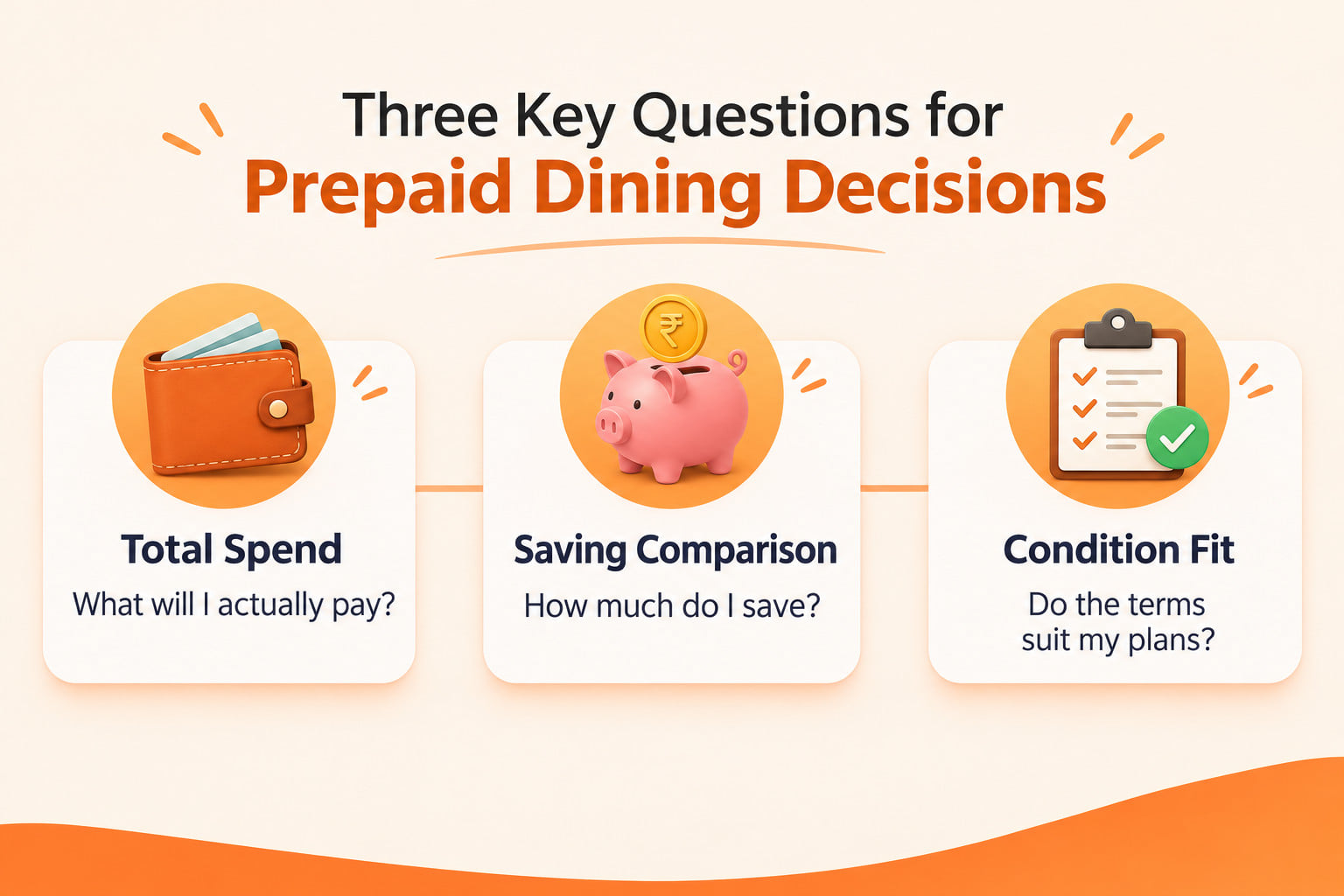
Value math is a simple concept with surprisingly complex execution. For a diner, value math means answering three questions before tapping "pay now": what is the total I will spend, what would the same meal cost without the deal, and do the conditions suit my outing?
Consider a family of four planning Sunday lunch at a North Indian restaurant in Gurgaon. The EazyDiner listing shows a prepaid deal: pay a fixed amount and receive a stated discount on the food bill. The family needs to know whether beverages are included, whether the discount applies per person or per table, and whether the restaurant's weekend menu differs from its weekday menu.
When those answers sit behind a "terms and conditions" link in small text, the family hesitates. When those answers appear directly on the deal card, the family books. That is the difference value math makes. EazyDiner's approach of surfacing the prepaid price, the effective discount and the key conditions on the deal page itself is designed to close that gap.
Three conditions that shape the calculation
Menu scope and exclusions
Not every prepaid deal covers the entire menu. Some exclude beverages, some exclude specific premium dishes, and some apply only to the a la carte selection rather than the buffet. A diner who discovers these exclusions after paying feels misled, even if the deal itself was genuine. EazyDiner addresses this by listing applicable menu categories on the deal page, so the diner can match the offer against what the group actually plans to order.
Group size and minimum spend
A prepaid deal offering 50% off on a minimum bill of ₹2,000 works beautifully for a group of four ordering generously. For a couple splitting a light lunch, the same deal may force unnecessary ordering just to hit the threshold. Value math must account for group size. EazyDiner's deal descriptions can help diners gauge whether the minimum spend aligns with their party's likely order, turning a generic discount into a personal saving.
Timing and day restrictions
Some prepaid offers are valid only on weekdays, or only for dinner service between 7 to 11 PM. A diner planning a Saturday brunch who purchases a weekday deal wastes money rather than saving it. Clear time and day labels on the deal page prevent this mismatch. When EazyDiner flags "valid Monday to Thursday, dinner only" in a visible position, the diner self selects into the right offer.
Why transparency drives growth
Prepaid dining in India is not a niche experiment. Restaurants benefit because prepaid commitments reduce no-shows and help forecast covers. Diners benefit because they lock in savings before arriving. The model works for both sides, but only when the diner's confidence in the deal is high.
Confidence comes from transparency. When a diner on EazyDiner can see the original price, the prepaid price, the percentage saved and the conditions, all on one screen, the decision becomes rational rather than anxious. That rationality is what converts browsers into buyers.
Restaurants that partner with EazyDiner for prepaid deals also gain from this transparency. A clearly presented offer attracts diners who genuinely intend to visit, rather than bargain hunters who book speculatively and cancel. The result is higher redemption rates and better table utilisation for the restaurant.
Matching deals to outing types
Not every prepaid deal suits every occasion. A weekday lunch deal near an office in Lower Parel serves a different need than a birthday dinner deal at a fine dining Italian restaurant in Khan Market. EazyDiner's categorisation by cuisine, location and occasion helps diners filter for relevance before they even look at the price.
For a couple searching "dining deals near me" on a Friday evening, the right prepaid offer is one that covers dinner at a restaurant they would have chosen anyway, at a price that feels like a genuine reward for committing in advance. For a family searching "best prepaid restaurant deals near me" before a weekend outing, the right offer is one where the minimum spend matches a family-sized order, and the cuisine suits everyone at the table.
When the platform matches the deal to the outing type, value math becomes almost automatic. The diner sees a relevant restaurant, a clear saving and conditions that fit. The decision takes seconds.
What the industry must do next
Prepaid dining in India can keep growing, but growth is not guaranteed by simply publishing more deals. The industry, and platforms like EazyDiner in particular, must keep investing in how deals are presented, not just what deals are offered.
That means showing effective spend after exclusions, not just headline discounts. That means labelling time and day restrictions prominently, not in footnotes. That means helping diners compare prepaid versus full price for their specific group size and cuisine preference.
EazyDiner's role in this evolution is to be the platform where prepaid value math is easiest. When diners associate EazyDiner with transparent, trustworthy prepaid education, the platform earns repeat visits and repeat bookings. When the value math is clear, the market grows.
If you find yourself hesitating over a prepaid deal, check whether the listing answers three questions: what you pay, what you save, and whether the conditions match your plans. On EazyDiner, those answers are designed to be visible before you commit, so the decision feels informed rather than risky.