
What Is Reservation Management in Restaurants?
Reservation management keeps tables filled and guest flow organised
27 Nov, 2026 by Editorial Team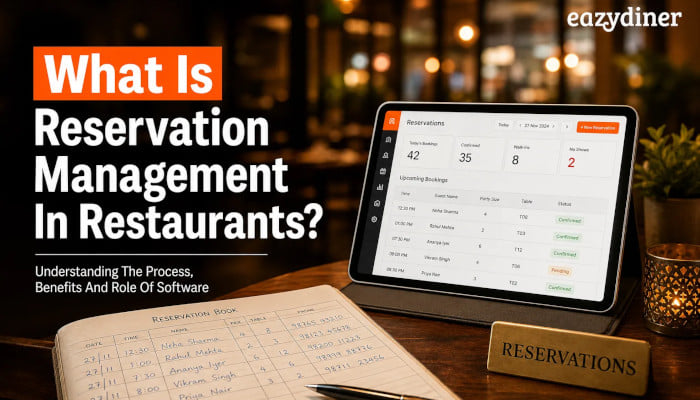
Every restaurant that accepts bookings, whether a 20-seat cafe or a 200-cover fine dining room, runs some form of reservation management. Yet many operators in India still rely on handwritten diaries, phone calls and memory. Understanding what reservation management actually involves, and why it matters, is the first step toward filling more covers and delivering a smoother guest experience. EazyDiner's Livetable platform is built around this exact operational need.
TL;DR - Summary
- What is reservation management?
Reservation management is the end-to-end process a restaurant uses to accept, confirm, organise and honour table bookings. It covers everything from the moment a guest requests a slot to the moment the table is cleared and made available again.
- Why does it matter?
Effective reservation management can help restaurants seat more guests per service, reduce no-shows, coordinate kitchen and floor staff, and create a predictable revenue flow, especially during peak hours.
- How does software help?
Reservation management software such as Livetable by EazyDiner is designed to replace manual diaries with a digital dashboard that tracks bookings, table allocation, confirmations and guest history in one place.
What reservation management covers
Reservation management is the structured process a restaurant follows to handle every booking from request to departure. It includes accepting reservations through phone, walk-in or digital channels, confirming each booking with the guest, assigning tables based on party size and seating layout, coordinating service timing with the kitchen, and releasing tables promptly after guests leave.
In practice, reservation management also means tracking cancellations, managing waitlists during busy periods and recording guest preferences. A restaurant that seats 80 covers across lunch and dinner cannot afford to lose even a few tables to double bookings or forgotten confirmations. The process is operational, not decorative; it directly shapes how many guests a restaurant can serve each day.
Why restaurants need it
Without a clear reservation process, restaurants face predictable problems. No-shows leave empty tables during peak hours. Overbooking frustrates guests who arrive to find no seat. Staff waste time fielding calls instead of attending to diners already seated. Weekend and holiday rushes become chaotic when there is no system to stagger arrivals.
Reservation management addresses each of these pain points. Confirmation messages, whether sent by SMS or through a booking platform, can help reduce no-shows by reminding guests of their commitment. Table allocation rules prevent double bookings. Staggered seating times spread kitchen load so food quality stays consistent. For restaurant operators in India, where weekends and festivals drive sharp demand spikes, a reliable reservation process is not optional; it is essential to protecting revenue and guest satisfaction.
How software supports the process
Reservation management software replaces the paper diary with a digital system. Livetable by EazyDiner, for example, is designed to give restaurant teams a centralised dashboard where bookings, table status and guest details are visible at a glance. Staff can see which tables are occupied, which are confirmed for later slots and which are free for walk-ins.
Software can also automate confirmations, send reminders before the booking time and log guest visit history. For multi-outlet operators, a cloud-based tool means managers can monitor covers across locations without being physically present. The goal is not to remove human judgement from hospitality; it is to free staff from repetitive admin so they can focus on the guest experience.
Restaurant operators researching reservation management for the first time will find that the concept is straightforward, but execution separates busy restaurants from struggling ones. A clear process, supported by the right tools, can help any restaurant seat more guests, reduce wasted covers and deliver consistent service. EazyDiner's Livetable is designed to bring that structure to restaurants across India, from neighbourhood bistros to large fine dining venues.